This is the biggest update Driftwake has had, and the reason is a good one: development has found its groove. Over the last few releases I've built a set of tools and workflows around the game: separate lanes of work that run side by side without stepping on each other, a landing queue that checks every change before it goes in, a test suite that knows exactly which tests a change can affect and skips the rest, render tools that film a feature from every angle, and a performance gate every release has to pass. The upshot is more content per update without the quality slipping, and v1.18 is the first release built entirely that way.
It also settled a lot of what Driftwake is going to be. More on that at the end, but the short version: the roadmap has been rebuilt from the ground up to match.
Getting better at everything
The skill trees were too dense and too walled off from each other, so they've been rebuilt. Each tree is now a handful of big nodes that change how you play instead of a long list of small percentages. A shared Captain tree takes your level-up points, and weapon trees fill as you fight with that weapon. Weapons come in families, so a quarter of the mastery you earn with a cutlass also goes to the katana and the daggers: trying something new doesn't mean starting from nothing.
And it's not just fighting any more. Swimming, sailing, cooking and fishing are life skills you level by doing them, each with perks along the way. If you already had a captain, every point you'd spent is handed back once so you can rebuild on the new trees.
Gold that means something
Loot was far too generous. Drops are much scarcer now, and in co-op every captain rolls their own, so there's nothing to squabble over. A new weapon is an event again: from blue rarity up, every weapon comes with a named trait that changes how one of its moves plays. A finisher that bleeds, a dodge roll that leaves fire behind, a parry that answers with a free cut, a pistol that always crits right after a roll.
Shops are trades now, each with a short stock that changes every day: a smith, an armourer, a tailor, grocers, a cook. Rare gear is only sold by treasure merchants. You can buy back what you just sold, and wandering artisans sometimes camp on the islands' trails with a few goods of their own.
Food, fishing and the sea
Health comes back slowly once a fight is over, but in the thick of it you heal with food and drink: one key uses your chosen item, holding it opens a wheel to pick another. Buy ingredients, cook them in the ship's galley or over a campfire, and a meal gives you a buff for the next 10 to 20 minutes.
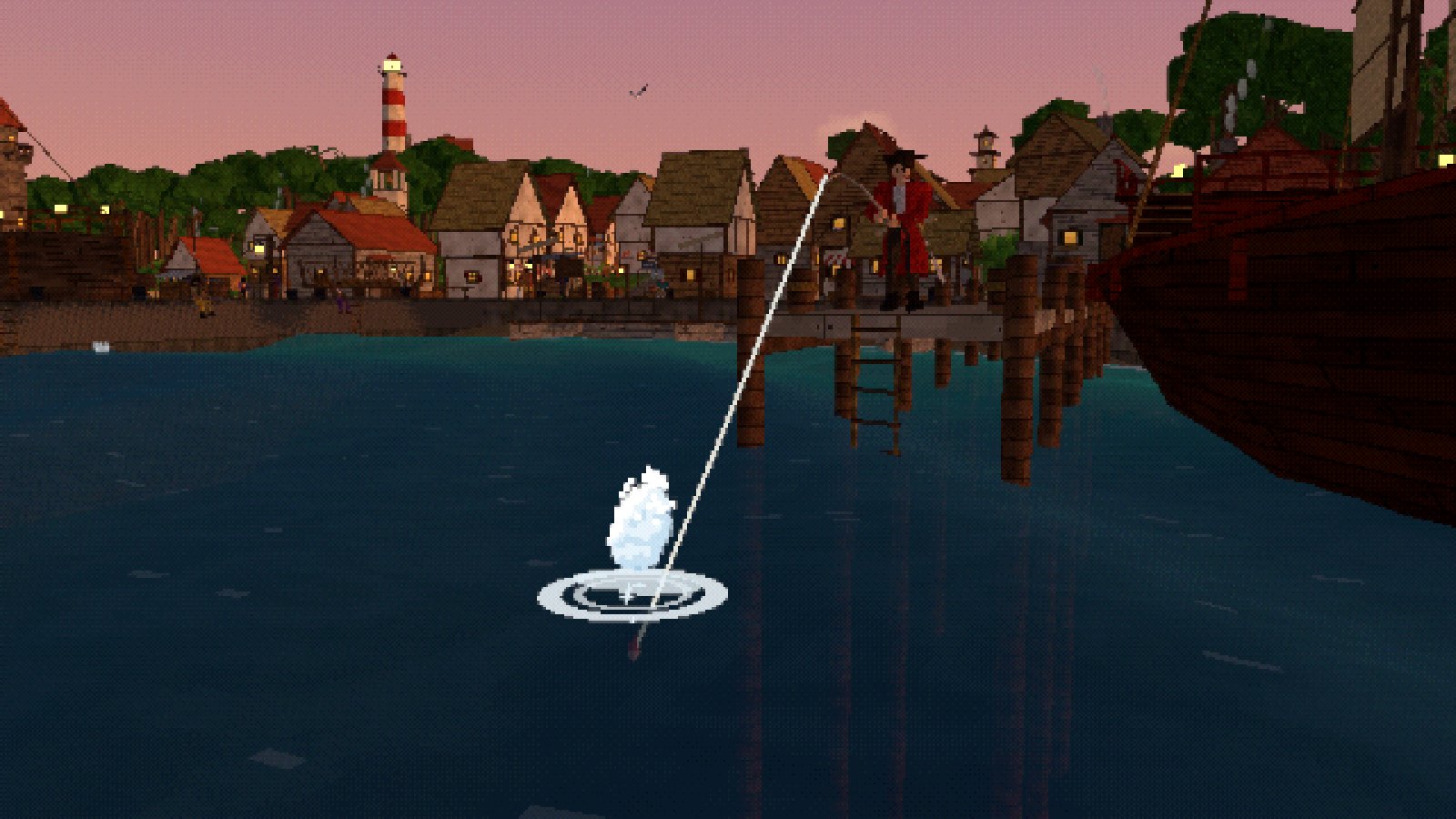
Fishing is a proper little game now. Buy a rod (there are four, from driftwood to a master's rod), put bait on the hook, cast, watch the bobber ride the swell and strike when it dips. There are 21 kinds of catch from common to legendary, depending on how deep the water is, which island you're off and whether it's day or night. Your first legendary teaches you a recipe.
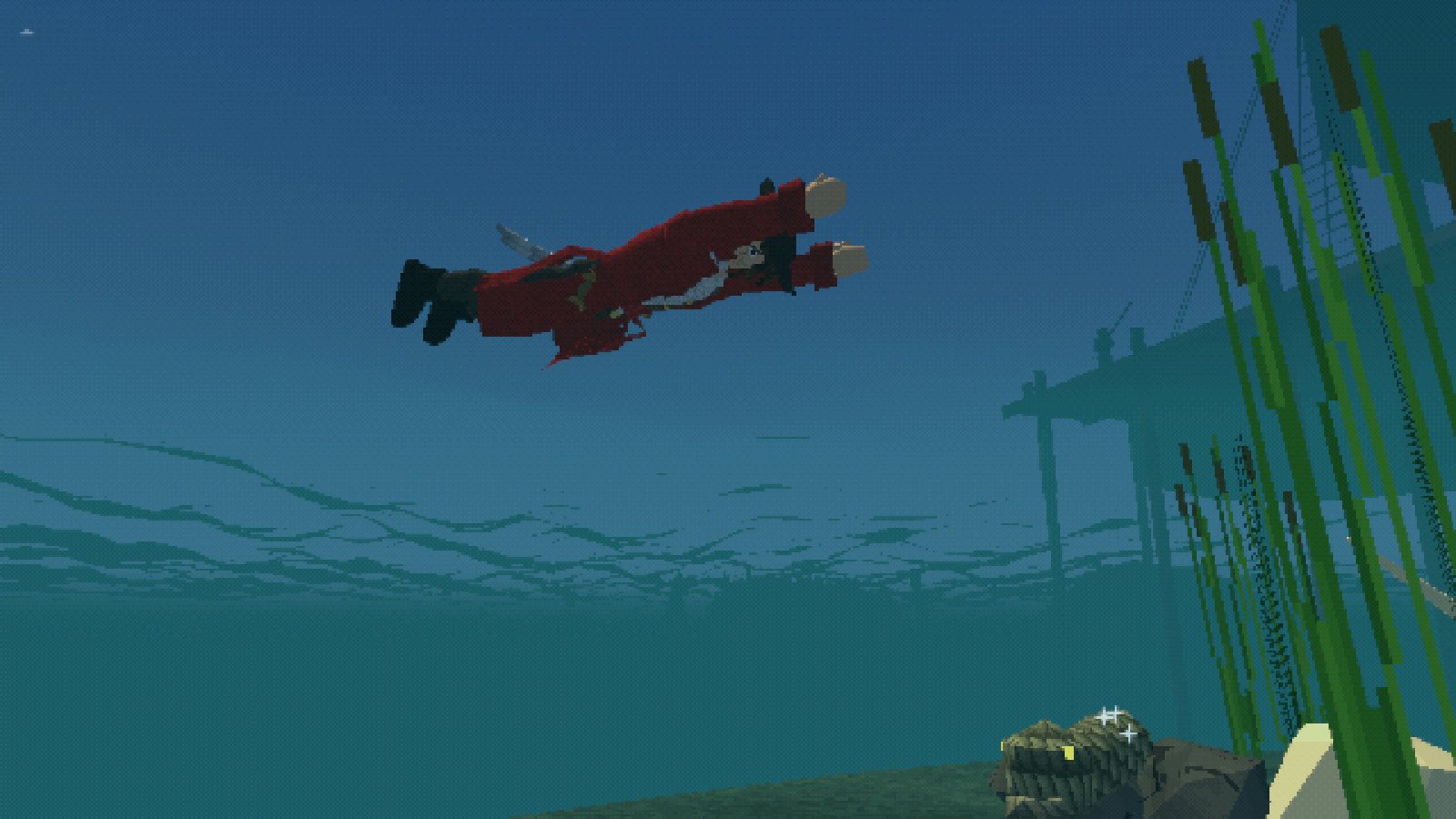
The water itself has more going on. You can dive for sunken chests, oyster beds and reefs with a breath meter ticking down, and rip currents, surf and freezing water near the snow islands all push back. Sharks circle wrecks (you'll see the fin first), morays wait in the rocks and jellyfish drift in fields. On the plus side you can't drown just from swimming too long any more: a tired swimmer floats and gets their breath back.
A map in your hands, a journal for the crew
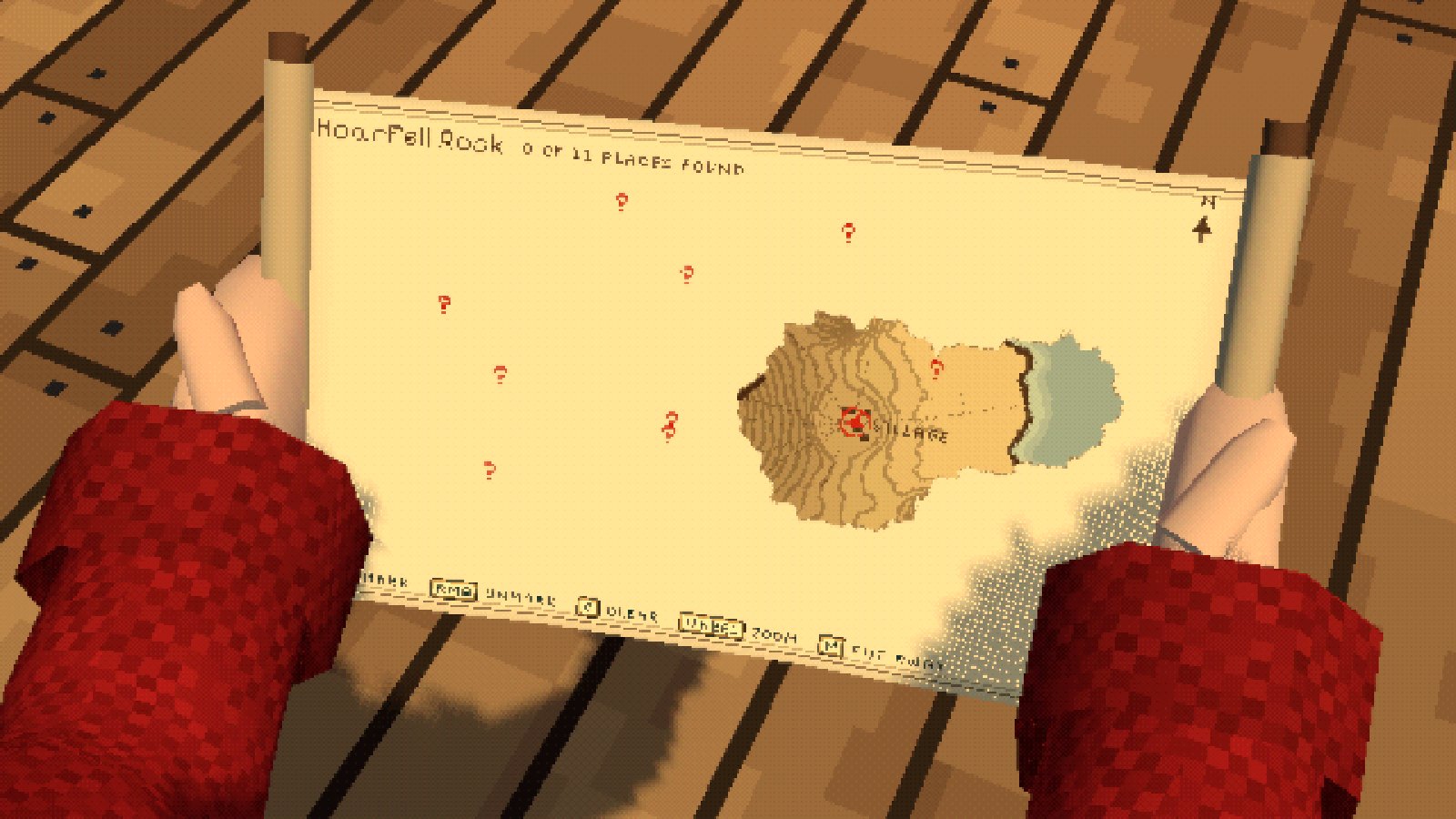
Press M and your captain unrolls a parchment map, with the camera looking down at it over their shoulder while the world carries on around you. Unexplored parts of an island are fogged until somebody in the crew walks there, and question marks hint at places nobody has found yet. Scroll out and it turns into the sea chart.
Quests got the same treatment. The crew shares a journal with active quests, finished ones and rumours. Quests come from people, notice boards and things you find, can take several steps, and you hand them back to whoever gave them for gold, items, recipes, a discount or a map of somewhere new. The people on the islands say their own things now instead of all repeating the same line, and you'll run into travellers, ambushes, festivals, shipwreck survivors and the odd duelist out on the trails.
A few more things in this one
- Downtime at sea. Lash the helm and the ship holds her course while you train, read, tinker, fish or sleep in your bunk, until a storm or a sail on the horizon cuts it short.
- Weapon loadouts. Save a couple of weapon setups and swap between them with one key.
- An action wheel for making camp, cooking, training and the rest, the same on land and at sea.
- Crew chat in co-op, and shift+click to move whole stacks between your bag and a chest.
- Ships: swinging ropes are a yard upgrade now, the rope is easier to grab mid-jump, and enemy crews actually board you.
- A performance pass: smoother towns and smaller stutters when the next island loads in.
Where it's heading
Honestly, it's getting really fun to play. The systems are starting to lean on each other: you sail out, dive a wreck, cook what you caught, go after a bounty with a trait weapon you saved up for, and come back stronger. That's the game I've been trying to make, and this update made the shape of it a lot clearer.
So the roadmap has been rebuilt to match, and it's an interactive timeline now. Next up is v1.19 with the Admiralty and rival pirate crews, who fight with the same weapons and skills you do, plus a new opening that shows you what's out there. After that come a new island type and the first cities, then a big pass on combat and gear, and then strongholds where the Driftfruits are kept.
I'm also starting to look into what it would take to put Driftwake on Steam one day. Nothing to announce yet, but it's on the horizon.
Every change is in the release notes. Bring bait.
Download for WindowsFree · co-op for up to 4
 Fair winds,
Zilk